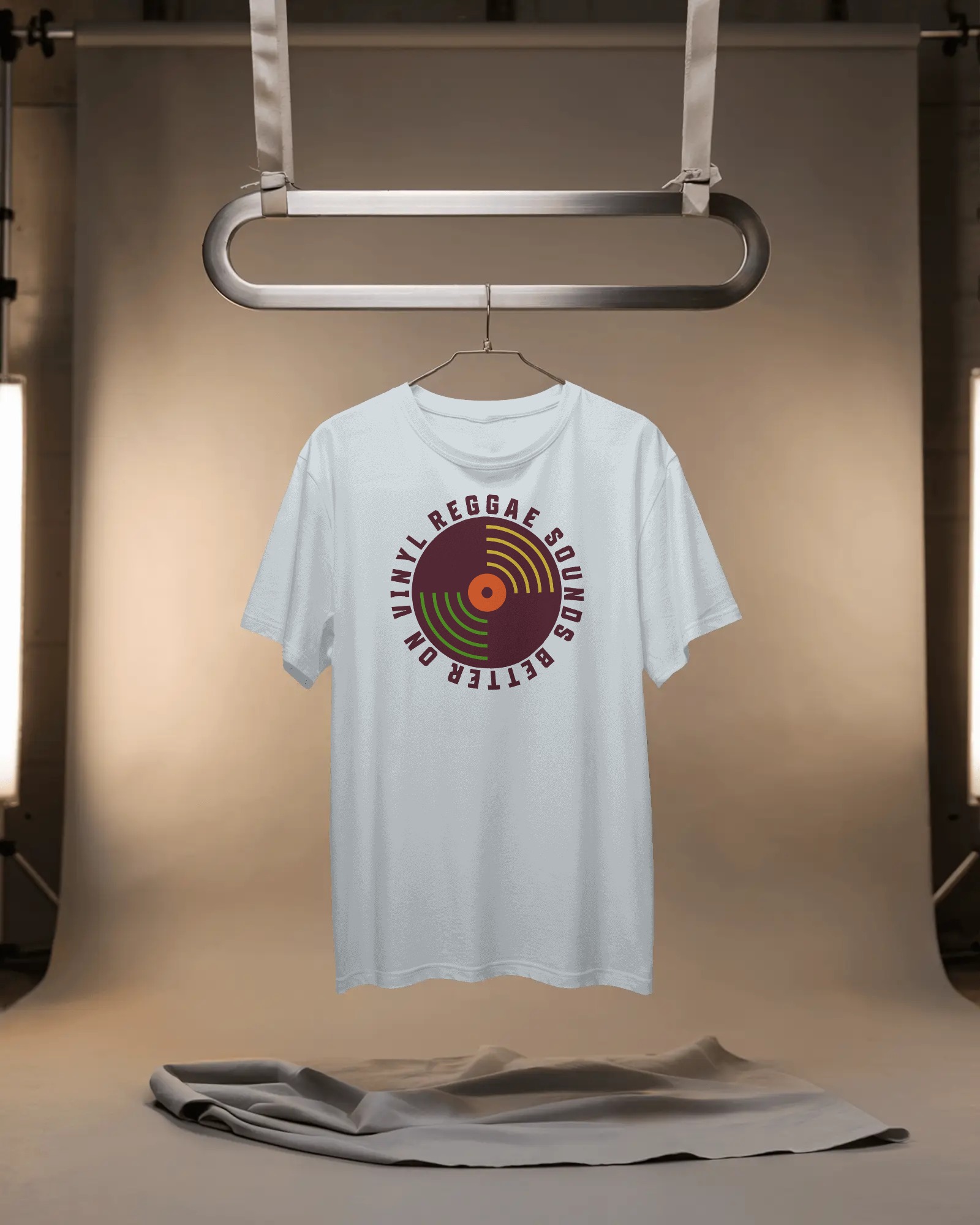

Reggae Sounds Better On Vinyl T-Shirt White / Natural
Reggae was built from the ground up to be played on vinyl, matching both the music's technical engineering and its sound-system culture.
Analog Bass Depth: Reggae relies on low-end sub-bass frequency dynamics. Analog vinyl handles continuous low-frequency soundwaves naturally, producing physical, room-shaking warmth rather than compressed, sharp digital bass.
Mixed for the Format: Classic 1960s–1980s reggae tracks (Roots, Dub, Ska) were tracked to tape and mastered specifically to cut vinyl master plates. Analog mixing techniques match vinyl's natural warmth.
The Sound-System Roots: Jamaican sound system operators cut custom "dubplates" on acetate to test tracks at street dances. The genre's signature EQ curves were engineered around high-wattage turntable rigs.
Full-Frequency Space: Digital compression (like MP3s) often trims high-end sizzle and low-end thud to save file size. Vinyl preserves the open space around off-beat guitar skanks, delay effects, and heavy dub reverb loops.
- Secure payment by card
- E-mail us, we reply swiftly!
- Fast Delivery
Description
Article no.: 156
This t-shirt is renowned for its soft feel,. One of the most popular items, it has a relaxed style made for everyday and casual wear.
* Seamless double-needle collar
* Double-needle sleeve and bottom hems
* 100% cotton
* Taped neck and shoulders for durability
Style and Fit!
Offers a modern, unisex fit that is neither too tight nor too loose, ideal for a variety of body types for a structured look.
* General
The tee combines comfort, style, and durability, making it a top choice for both everyday wear and craft projects.
* Wash
Maintain the tee's look and feel by washing it in cold water with similar colors.
* Dry
Tumble dry low or hang dry to preserve the fabric integrity and print quality.
Files and media
 | Attached file |